
The name of this blog is Talking-Translation. I feel that that is something worth bringing up as while my original goal has always been to write about translation, games and translation in games lately my would be developer dreams have unfairly taken over the website. Indeed we went from almost 2 years without a single blog post to weekly developer blogs, 12 of them in 3 months. Though those posts do their job of showcasing progress, most of all to me who needs it to fight imposter syndrome I did miss writing about translation. Every day I, as well as everyone else I know consumes translated content. Well translated, poorly translated, literally translated or cleverly translated, and do note literally and clever are not opposites here, we interact with translation on the daily. Which is why in the 5 or so years since I last wrote a practical example of localisation (the title of this series) I have grabbed dozens of examples of good and clever translation I wished to talk about. Screenshotting them, ripping them from TV or taking pictures when I saw it.
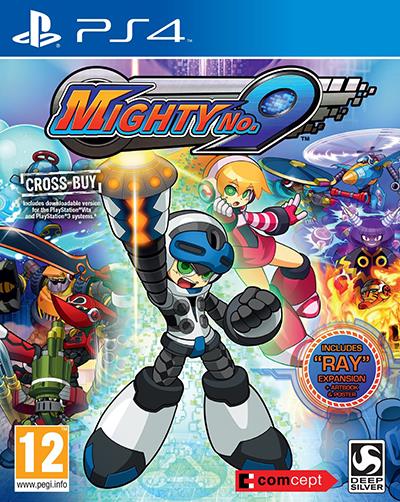
Sometimes I need a pallet cleanser. Like after playing Mighty Number 9 (it was fine, really but not great)
It had always been my intent to return to this series. Through depression, failed relationships and the worsening of my OCD I never stopped collecting examples. And as I work on a translation that I can hopefully share the results of soon I thought now to be a good time to write about one such example. I’ve previously talked about when not to translate, and given the example of the iconic Route 66 but what about when you need to translate, or otherwise it makes no sense? Do you play it straight? Refuse and offer no explanation? Do you just lampshade it or crack a joke about it? This is the question today’s example of localisation will answer. After all, what if you can’t just drop it?
Mega Man Fully Charged
I have plenty of thoughts about Mega Man Fully charged. I have thoughts about Mega Man in general. From the cancelation of Mega Man Legends 3, to the whole what even were the Elf Wars and other obscure lore details, I could spend hours talking about the series. As annoying as it is to have to remember to write Mega, space, Man instead of one word or dashing together like in Spider-man Mega Man is a series near and dear to my heart. So when a TV show aired on Portuguese TV based on the series I knew I had to watch it. How bad could it be.
Mega Man Fully Charged had, of course, a terrible reputation within the Mega Man community. Compared to the 1990s TV show it was decried as childish, for toddlers and the designs were universally called terrible. Common complaints were that the CGI monstrosity that they called Mega Man had nothing to do with the classic design of the video game character. That the idea of a Mega Mini was a betrayal of the character and that the new lore and background plot of the series were nothing like Mega Man. Where was Willy, the series long standing villain and antagonist? Who was this new villain? While there was one character named Willy he was a school mate and friend to Mega Man. In fact in this continuity Mega Man is a robot son of Dr Light, who spends his day to day as a school age child named Aki with a human sister. This blight on the continuity of Mega Man could not stand, right?
I ended up rather liking the show. This isn’t exactly a review of the series, but I found that its monster of the week nature with 3 or 4 recurring robot masters really jelled well with me. The intended target audience, when I watched it with children also seemed to like it. It didn’t matter that it wasn’t following the exact plot or design of the 80s video game series, to them, this was their Mega Man. A Mega Man for a new generation.
Of course to me there was another appeal. Within 5 minutes of putting on the first episode I had already recognised several voices, as the dubbers for the show had participated in several of my childhood movies and shows. It presented a nostalgic appeal that I had not thought would be there but that kept me watching even as things happened. So what was that dubbing and localisation decision that brought us here? The one I so want to talk about and reveal to you? Well let’s talk about Fire man.
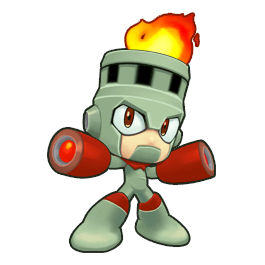
Not his cute look in Mega Man Powered up though, sadly.
HE IS FIRE MAN!
In this show Fire Man hates humans, to a bigoted degree. They’ve treaten him like a tool, treated him as disposable and poorly and he is now angry, mean and holding a grudge. In this first appearance he loudly, with all the gruff of the construction worker he’s supposed to be raspiness in his voice declares that HE IS Fireman, “I am Fireman”.
Immediately wise cracking, comic relief, and generally disliked by fans character Mega Mini shows up to crack a joke at poor Fire Man’s expense. Using the similarity between his name, that of the robot that sets things ablaze, Fire Man and the job where they put out fires he cracks. “Woah, hold on, Fire Man? Where is your hose? Your truck? Your spotted dog?”. All references to firefighters and their loyal dalmatian companions.
This greatly annoys not only Fire Man but also Aki, that is Mega Man, who goes “We’re kind of in the middle of something” causing Mega Mini to retreat back to his position inside Mega Man’s head. After all this is Mega Man’s first big fight, the first time he steps up to defend the public, and his friends and it’s no time for jokes. That will have to wait at least 2 or 3 minutes until he gains the upper hand!
So this is the situation we find ourselves in. The writers just made a pun that won’t work in most other languages. After all though firemen fight fires in every place on Earth many other countries and languages aren’t quite as literal with their naming. Even if different localisations had chosen to translate Fire Man from English to their local language, giving us an interesting question (is it man of fire, or man on fire?) the pun still wouldn’t work.
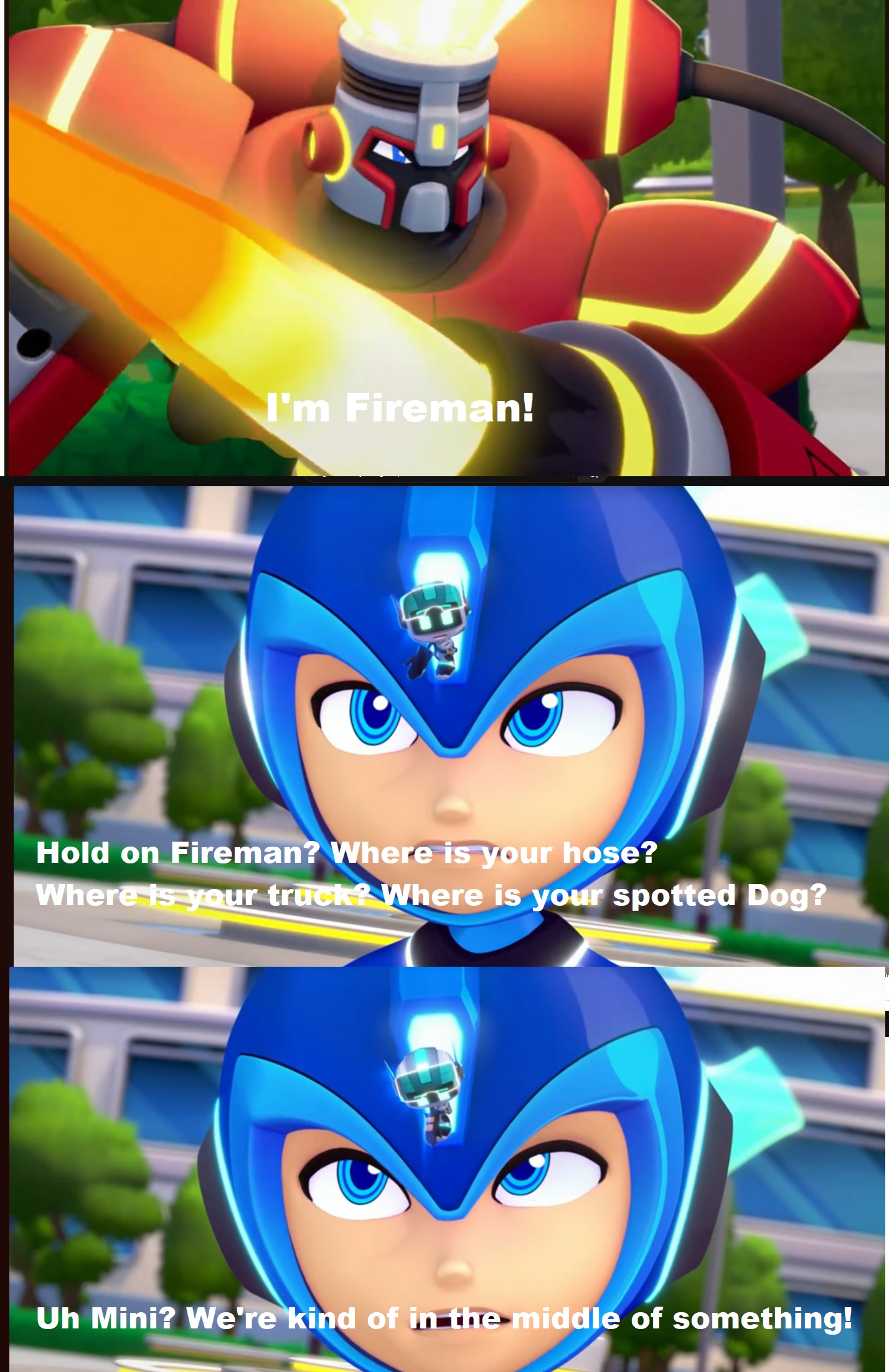
Sequence of 3 images showcasing Fire man declaring his name, Mega mini mocking him by confusing him with a firefighter and Aki annoyed telling him off for it.
Translating puns is an thankless job in that if you do your job well no one notices but if you do it wrong every single person will notice. Indeed many have called the ideal translation invisible, a much discussed topic in Translation Studies. Still this was a situation where something had to be made. Mini speaks and so we must put something there. Do we keep the joke? Do we remove it entirely? Do we change the dialogue so it says something else? One can easily imagine “I’ll burn you” “Burn us? Woah, we’re not beams of metal” “Mini I need to focus”, or something similar to maintain conflict. This would remove the joke, but maintain the context. Fire man loudly proclaiming his intent, Mini being in the way, Mega Man being annoyed at that.
So what did the Portuguese translators do? Did they keep the joke? Replace it entirely? Did they ignore there was a pun there? Well, they did something I have never quite seen before. Something that left me open mouthed at how smart it is. Here is the Portuguese Version:
“SOU o Fire man”
“Espera Espera Fire Man? Onde é que estão as Mangueiras? E o Camião? E o cão às pintas?
“Mini isso não funciona em Português”.
Which is just genius. It starts with a pretty literal translation of the first two lines. “I am Fire Man” and “Wait wait, where are the hoses, the truck, the spotted dog?”, it seems like they’re just going to follow it beat per beat even if it doesn’t make sense until they hit you with the third line. “Mini that (joke) doesn’t work in Portuguese.”
There is is. It subverts expectations. It plays with what you’re expecting and it very honestly tells you what is going on. It’s hilarious but also informative and it’s a decision I can respect. Think about it. Whoever localised the episode knows two things. One the joke doesn’t work in Portuguese. Two, they would need to come up with a similar pun or a replacement. It’s exactly why this works so well. Why not play it straight until you don’t? Why not translate it literally and then…admit yeah that doesn’t quite work?
It also works in that it makes Mega Man sound annoyed, just like in the original. Whether because it doesn’t work in Portuguese or because it’s just a bad pun, either way the end result is the same. Mega Man rolling his eyes and Mini retreating. It’s such a genius translation because it maintains both the context and spirit of the original while making the joke work in a way that it would otherwise not work. It’s funny in how it’s basically the translator putting their cards on the table and going “yeah, no, it doesn’t work but what can you do about it?”. In how honest it is it reads as wholesome.
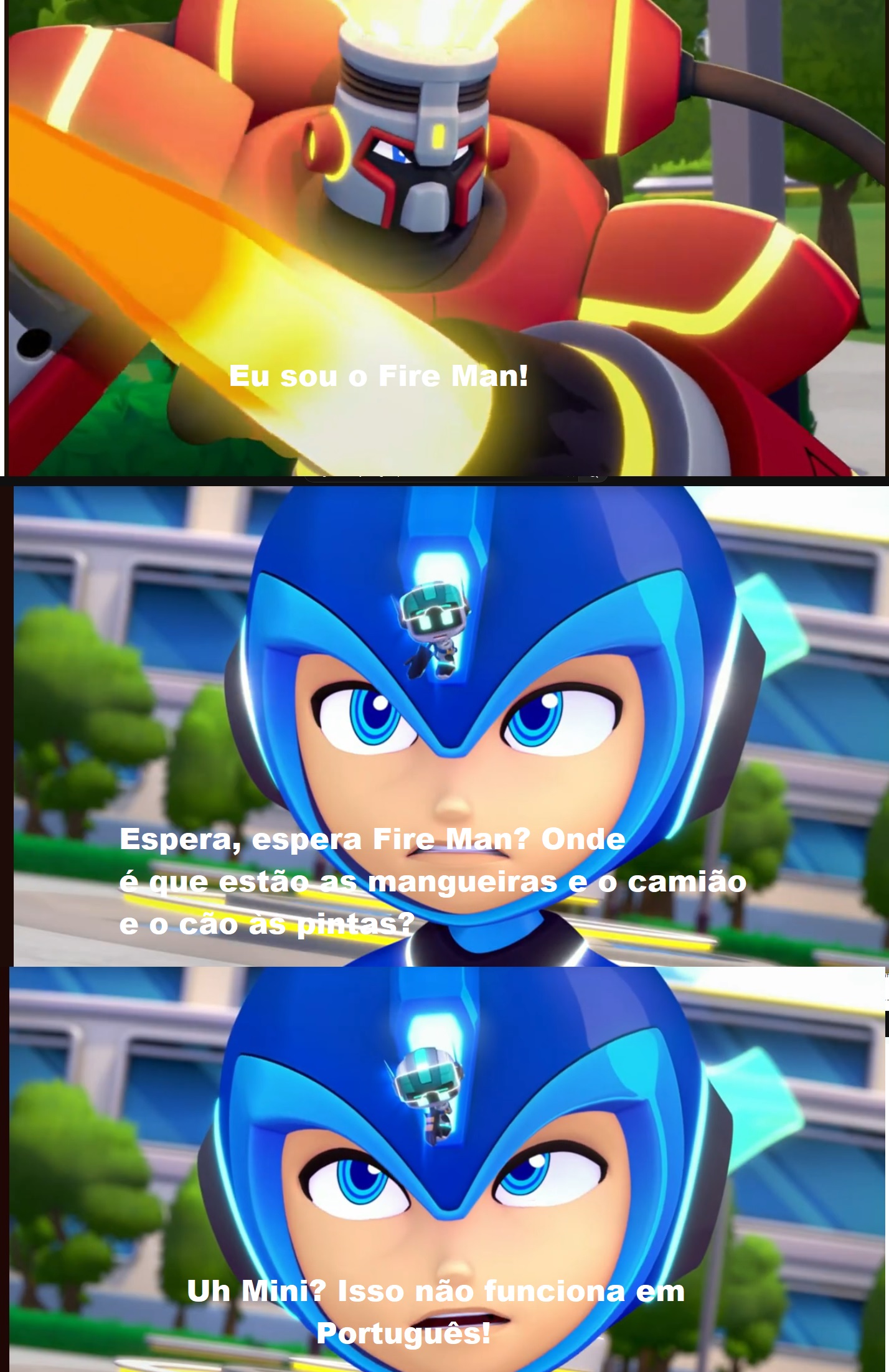
Sequence of 3 images where Fire Man declares his name, Mini makes a joke about firemen and Aki replies that the joke doesn’t land in Portuguese.
It helps that “I’m Fire Man” “Oh so you’re a fireman” is such a dad joke to make, it’s corny and eye rolling in all the best ways. The kind of joke you want to hate but still makes you crack a smile.
Like I said before in the last 5 or so years of consuming media and content in Portuguese I’ve seen of other clever, funny or otherwise noteworthy translations and localisations. I hope that, in highlighting them I can pay just a little bit of homage to translators that make media consumable to more people. And if in the process I end up creating a curated list of things that made me smile? All the better.
I just hope it won’t take me 5 years to make the next post, of course…